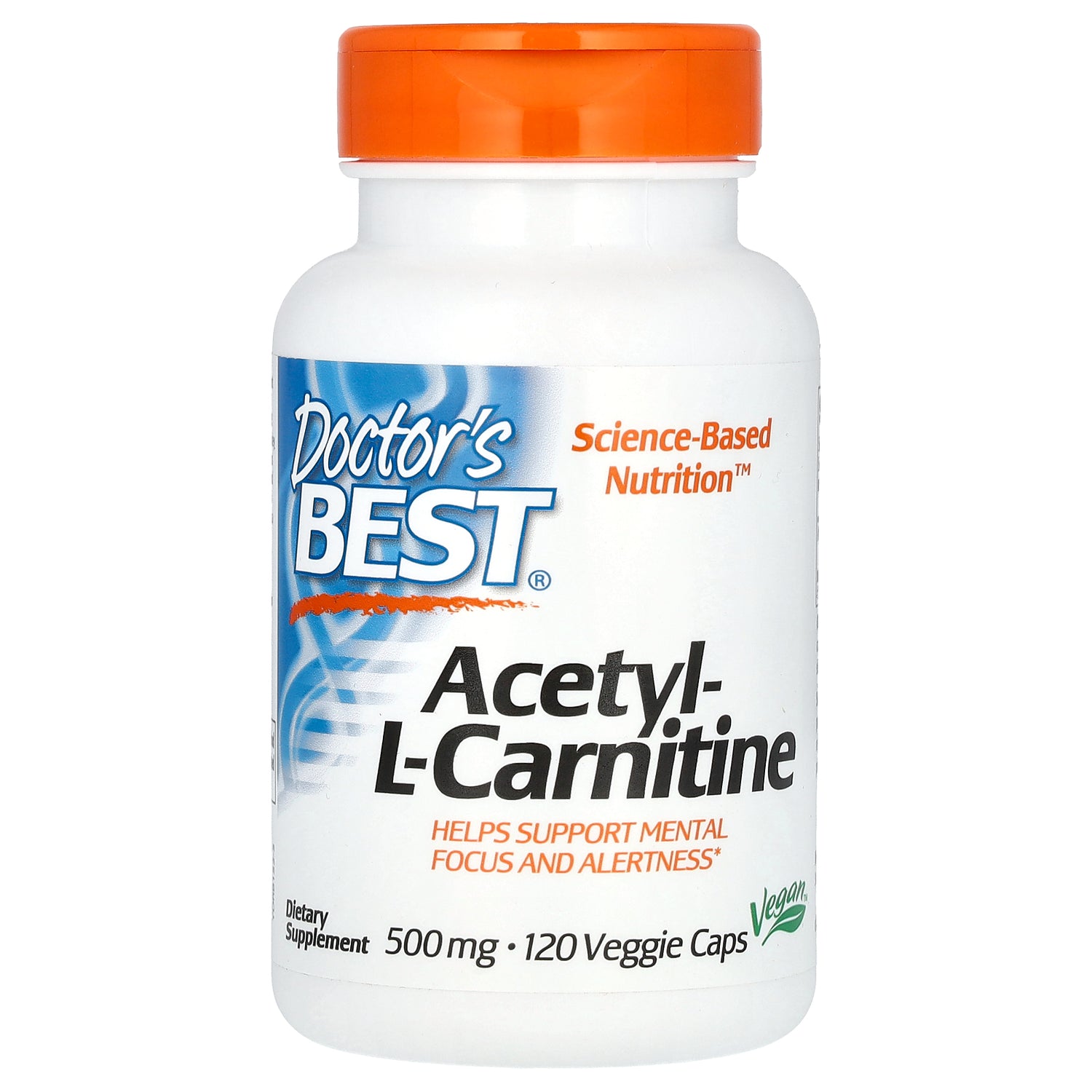
Acetyl-L-Carnitine (ALC) is a naturally occurring form of L-Carnitine, a vitamin-like nutrient synthesized in the body from the amino acids lysine and methionine. ALC plays a key role in the production of acetylcholine, an important neurotransmitter for brain and nerve cell function.
The Acetyl-L-Carnitine in this product is derived from a base of pharmaceutical grade L-Carnitine manufactured by patented, FDA-approved process that fully complies with the USP 25, FCC 4 and EU monographs. It is GMO-free, pesticide-free and BSE safe.
Suggested Use: Take 1 to 4 capsules daily with or without food.
Supplement Facts Serving size: 1 Capsule Servings Per Container: 120 Amount Per Serving %DV Acetyl-L-Carnitine 500 mg † (from 588mg acetyl-l-carnitine HCl supplied by Sigma tau) -------------------------------------------------------------------------------------------- † Daily Value not established.
Acetyl-L-Carnitine (ALC) is a naturally occurring form of LCarnitine, a vitamin-like nutrient synthesized in the body from the amino acids lysine and methionine. ALC serves as a transport molecule for “active acetate,” which is a source of fuel for metabolic processes that take place in cells. ALC carries active acetate (the “Acetyl” portion) directly into the mitochondrion, the cell’s energy-generating structure. Active acetate is used to produce cellular energy in the form of ATP. Both L-carnitine and ALC serve as fat carriers. Unlike L-carnitine, ALC readily crosses the blood-brain barrier, where it has specific benefits for brain neurons. When taken orally, ALC has been shown to promote healthy ALC levels in both blood and cerebrospinal fluid, demonstrating its uptake in the brain.1
Best Acetyl-L-Carnitine contains Biosint™ Acetyl-L-Carnitine, which is manufactured in Italy by the reputable company Sigma-Tau. It is derived from a base of pharmaceutical grade Lcarnitine manufactured using an FDA approved process that fully complies with international monograph standards for carnitine production. Known as a global leader in L-carnitine research, Sigma-Tau holds numerous patents for production of L-carnitine, the derivatives of which are used in clinical trials.
Supports Cognitive Function*
ALC has been studied for its effect on cognitive performance and emotional health in the elderly. In a single-blind, placebo-controlled trial, 481 elderly subjects taking 1500 mg of ALC per day were found to have improved scores on a memory test assessing cognitive abilities after 90 days of ALC supplementation.2 In addition to being known for its effects on recognition and memory, placebo-controlled ALC research has also shown better scores in scales measuring the mood of elderly people.2, 3
Supports Biosynthesis of Acetylcholine, a Key Neurotransmitter for Brain and Nerve Function*
Brain function requires coordinated communication between brain cells. Neurons (brain & nerve cells) communicate across tiny cell-to-cell gaps called synapses. The passage of an electrical impulse from one neuron to the next requires a neurotransmitter to act as a messenger to pass signals to adjacent neurons. When an electrical signal arrives at the synaptic junction, the neuron releases a neurotransmitter into the synapse. The neuron on the other side of the synapse contains receptors for the neurotransmitter (that will bind it), triggering a series of chemical events to send a new electrical signal down the membrane of the receiving neuron. Neurotransmitters work together like an orchestra to transmit information throughout the brain and nervous system.
Acetylcholine is the most abundant neurotransmitter in the body, regulating activities of vital organs and blood vessels, and communication between nerves and muscles. In the brain, acetylcholine helps to facilitate memory and learning, as well as influencing emotions. ALC is structurally similar to acetylcholine— enough so that brain neurons stimulated by acetylcholine are receptive to stimulation by ALC.4 In an experimental animal model, it was shown that ALC can furnish acetyl groups to be utilized during the natural biosynthesis of acetylcholine.5 ALC’s structural similarity to acetylcholine has led researchers to investigate its effects on mental function and emotional health.6
Helps Supply the Brain With Energy Through Mitochondrial Efficiency*
The acetyl groups donated by ALC can be used to naturally synthesize acetyl-CoA, the key substrate for energy metabolism in the mitochondrion.1 Acetyl-CoA enters the Krebs cycle, the mitochondrial pathway that generates cellular energy in the form of ATP. Age-related decreases in mitochondrial oxidative capacity are a well-known cause of aging, as the organelles and organs in the body begin to operate less efficiently without ideal ATP production. The effects of decreased mitochondrial oxidative capacity are especially prevalent in organs that require high-energy inputs, such as the brain and heart. Recent clinical studies have shown that ALC helps to promote and maintain healthy mitochondrial function.7
Helps Uphold the Integrity of Intracellular Membranes*
Phospholipids are structural components of brain cell membranes that regulate neuronal function. ALC has been shown to promote healthy membrane phospholipid metabolism in research subjects.8 Additionally, the acetyl groups in ALC are naturally utilized by the body to modify the activity of proteins in neuronal membranes.1 Through these means, ALC promotes normal membrane function, stability, and structural integrity.9
Supports Nerve Growth Factor Production*
The body produces specialized proteins called growth factors that are essential to the growth and repair of tissue. Nerve Growth Factor (NGF) prolongs the survival of neurons in both the central and peripheral nervous systems. As we age, our central nervous system experiences a decrease in the binding of NGF to neuron membranes. ALC has shown the ability to promote the maintenance of normal interactions between NGF and neuron membranes. 10 Given to aged rats, ALC demonstrated effectiveness in promoting normal levels of NGF, and it helped maintain utilization of the growth factor in the rats throughout the duration of the study. Maintaining ideal levels of NGF is essential for the health of cholinergic neurons (nerve cells stimulated by acetylcholine), as cholinergic neurons lose some functional capacity due to a lack of NGF. In aged rats, ALC is known to promote the health of cholinergic neurons.11 In sum, such results suggest that ALC positively influences the maintenance of healthy and normal NGF activity.1
Supports Healthy Brain Neuron Function*
Several animal studies have revealed that ALC contains many biochemical characteristics that help neurons face the aging process optimally.12, 13 ALC has been shown to raise levels of glutathione, a key antioxidant, in isolated mouse brain tissue.14 ALC also reduces blood levels of MDA (malondialdehyde), a free radical byproduct.15 Furthermore, ALC is a chelator of iron: it acts as a molecule that can naturally sequester iron in the body to prevent iron-mediated oxidative damage to cells.16 As a whole, data from in vitro and animal studies suggest that ALC is effective towards the maintenance of healthy brain neurons and normal neuronal energetic processes. This hypothesis is supported by human studies that demonstrate the potential of ALC to promote healthy brain function in elderly persons.17
ALC is considered safe and well tolerated when consumed orally. Taken as directed by the label, the maximum daily dosage of this product is 4 capsules per day, well within the limits reported by human safety studies of ALC using the Observed Safety Level (OSL) method.17
Pettegrew, J.W., J. Levine, and R.J. McClure, Molecular Psychiatry, 2000. 5(6): p. 616-632.
Salvioli, G. and M. Neri, Drugs Exp Clin Res, 1994. 20(4): p. 169-76.
Tempesta, E., et al., Drugs Exp Clin Res, 1987. 13(7): p. 417- 23.
Falchetto, S., G. Kato, and L. Provini, Can J Physiol Pharmacol, 1971. 49(1): p. 1-7.
Dolezal, V. and S. Tucek, J Neurochem, 1981. 36(4): p. 1323-30.
Passeri, M., et al., Int J Clin Pharmacol Res, 1988. 8(5): p. 367-76.
Rosca, M.G., H. Lemieux, and C.L. Hoppel, Adv Drug Deliv Rev, 2009. 61(14): p. 1332-42.
Pettegrew, J.W., et al., Neurobiol Aging, 1995. 16(1): p. 1-4.
Arduini, A., et al., Life Sci, 1990. 47(26): p. 2395-400.
Taglialatela, G., et al., Biochem Pharmacol, 1992. 44(3): p. 577- 85.
Taglialatela, G., et al., Exp Gerontol, 1994. 29(1): p. 55-66.
Forloni, G., N. Angeretti, and S., J Neurosci Res, 1994. 37(1): p. 92-6.
Steffen, V., et al., Hum Exp Toxicol, 1995. 14(11): p. 865-71.
Fariello, R.G., et al., Life Sci, 1988. 43(3): p. 289-92.
Calvani, M., et al., Ann N Y Acad Sci, 1992. 663: p. 483-6.
Calvani, M. and A. Carta, Dementia, 1991. 2: p. 1-6.
Hathcock, J.N. and A., Regul Toxicol Pharmacol, 2006. 46(1): p. 23-8.
Best ALC is pure Acetyl-L-Carnitine. It is totally different from fumarate, tartrate, etc.
Q2.
Is ALC natural or synthetic?
A2.
It is Synthetic.
Q3.
I have read that carnitine supplements have an effect on thyroid function. What would be the expected effect on someone with hypothyroisim? Or is carnitine contra-indicated for a person with hypothyroidism?
A3.
There is what is considered a "moderate" interaction between L-carnitine and thyroid hormone (often taken in hypothyroidism conditions).
Although not understood completely, it appears that L-carnitine may be an antagonist of thyroid hormone, and has been shown to be beneficial in those suffering from hyperthyroidism. In one study, 2-4 grams of L-carnitine improved symptoms of hyperthyroidism, suggesting that it blocked thyroid hormone's actions (Benvenga et al 2001). In vitro trials have also indicated that L-carnitine inhibits thyroid hormones T3 and T4 entry into peripheral cells (Benvenga et al 2004). Although there are no published human clinical trials measuring the effects of L-carnitine on thyroid function or thyroid hormone levels, it can be assumed that it may have a inhibitory effect on thyroid hormone and therefore contraindicated in those with hypothyroid conditions. More studies are warranted to determine exactly what this effect is and to what extent the effect is in humans.
Q4.
What are your gelatin capsules made of?
A4.
Our capsules are typical gelatin capsules, with the exception of select products now available in veggie cap form. See veggie cap listing. They are made of gelatin from cattle, like the “Knox gelatin” sold in grocery stores.
The gelatin used to make Doctor’s Best’s capsules is manufactured in accordance with strict guidelines that ensure it is BSE-free. The FDA and the supplement industry approved these guidelines. Our gelatin is made only from cattle living in non-BSE countries. All Doctor’s Best capsules are in full compliance with the FDA’s September 1997 guidance for industry for “The Sourcing and Processing of Gelatin to Reduce the Potential Risk Posed by Bovine Spongiform Encephalopathy in FDA-Regulated Products for Human Use.”
Q5.
How long would it take for a CAPSULE to dissolve?
A5.
Approximately 30-45 minutes. For 2-piece gelatin capsule, the USP standard for maximum dissolution time is 45 minutes. According to one large encapsulator, gelatin capsules typically dissolve in about 30 minutes, but never more than 45 minutes.
Note: Testing dissolution times of capsules and tablets at home using vinegar is not an accurate way to learn what happens to capsules and tablets in your stomach. Because stomach acid is much stronger than vinegar, capsules and tablets dissolve much faster in the stomach than in a glass of water or vinegar. Also, the stomach continually “agitates” the content much like a washing machine does.
Q6.
What is modified cellulose and is it safe?
A6.
The cellulose is derived from alpha cellulose from softwood pulp. This softwood pulp may be derived from hemlock, spruce or other soft woods. It is made by cooking raw plant fiber in an aqueous solution to separate the cellulose, and then purified. It then goes through extra processing to further break down the fiber. The finished product contains no residual solvents. Excipients are needed to make the materials flow into the capsule and are extremely minute in amounts and are safe.
Q7.
I am somewhat confused on how to take the DRB products. On many of the labels the Suggested Adult Use will list something along the lines of: Take 2 capsules daily, but it does not state whether they should be taken together or separately. What is the correct usage?
A7.
Unless otherwise specified on the label, the product may be taken together or separately.
Q8.
Is there a limit to how many vitamins can be taken safely in one day?
A8.
While our bodies need vitamins and minerals, like other things, if taken in large amounts they may adversely affect health. Large amounts of anything can be toxic. It is important to follow all label directions and discuss any concerns with your physician.
Q9.
What are the other ingredients and why are they used?
A9.
These are used as flow agents and aid in the production to keep the machinery running smoothly and the capsules filling correctly. Similarly for the croscarmellose sodium, which is cellulose (sourced from the cell walls of green plants), and is used to help disintegrate the tablet in the stomach.
Q10.
What is Silicon Dioxide and how is it produced?
A10.
Silicon dioxide is the most abundant mineral in the Earth’s crust, and it is found across the world in various forms. Silicon dioxide (SiO2) in its pure form is colorless to white. Precipitated synthetic amorphous silicas are obtained from a process essentially using sand.
Precipitated silica is a safe (non-crystalline) mineral. According to the relevant United States and European Union standards, precipitated silica is non-hazardous with regard to manufacture, transportation and handling. Precipitated silica is an inert powder and a certified food and feed additive.
Q11.
Should I be concerned when I see that Silicon Dioxide has been used as an excipient in DRB products?
A11.
According to numerous studies reviewed to date on this long-term Generally Recognized As Safe (GRAS) listed food additive, the following was found:
The oral toxicity in mice is greater than (>) 5 grams/kilogram of body weight (Kimmerle 1968), or greater than 350 grams in one dose in humans based on allometric comparisons between mice and humans.
A single dose of 2.5 grams of amorphous polymeric silicon dioxide to human volunteers did not significantly raise the SiO2 excretion in the urine thus suggesting poor absorption of the compound (silicon dioxide)--(Langendorf 1966). Less than one one-hundredth (1000th) of the dose was found in urine, suggesting extremely poor absorption--(Langendorf 1966).
This would suggest that there is no scientific reason to eliminate silicon dioxide as an excipient at the very low levels found in dietary supplements.
For further information re: Silicon dioxide, see "Minerals, Trace Elements and Human Health, 4th Edition."
Q12.
Why is silicon dioxide used as an excipient in DRB products?
A12.
Silicon Dioxide is commonly used as a flow agent in supplements. It also works as an anti-caking agent, and is added as an ingredient in foods, many multivitamins and mineral supplements because silicon is necessary for good health and is a necessary nutrient for the health of skin, hair, nails and bones.
Q13.
What is the source of the cellulose found in the some of the Doctor’s Best products?
A13.
The cellulose is made from alpha cellulose from softwood pulp. This softwood pulp may be derived from hemlock, Spruce or other soft woods.
Q14.
Since Doctor's Best does not manufacture its supplements, how are the purity and integrity of supplements verified? In addition, how are your prices lower than other brands? Does this mean that quality is being compromised?
A14.
Doctor's Best supplements are manufactured in the US at cGMP (current Good Manufacturing Practice) certified facilities. All of our manufacturers and suppliers go through our vendor qualification program, which includes inspections and testing, before we agree to work with them. Our finished products have also been tested at the raw material level, in process, and as a finished product to ensure safety and quality. We place the highest importance on safety and quality and do not compromise for the sake of a better price point. The price points are lower because of production size and the overall business structure. We also place great importance on making our supplements available and affordable to those who need them most.
Q15.
What is HPLC?
A15.
HPLC stands for "High Performance Liquid Chromatography." This is an analytical lab testing method that is used to quantify the active ingredients. It is considered to be a very sensitive and accurate test. HPLC testing is a tool recognized as a quality benchmark for herbal extracts.
Q16.
Does cellulose interfere with the absorption of supplements?
A16.
Dietary fiber in general is known to change intestinal viscosity, nutrient absorption, transit time, and gut hormones. Although there is some evidence from animal studies that large amounts of cellulose in the diet (6-12% of diet) can interfere with nutrient absorption (particularly minerals), there is no evidence that the small amount in capsules interfere with nutrient absorption, as there are many pharmacokinetic studies that have been conducted with nutrients in cellulose capsules, demonstrating the ability of the nutrients to be effectively absorbed.